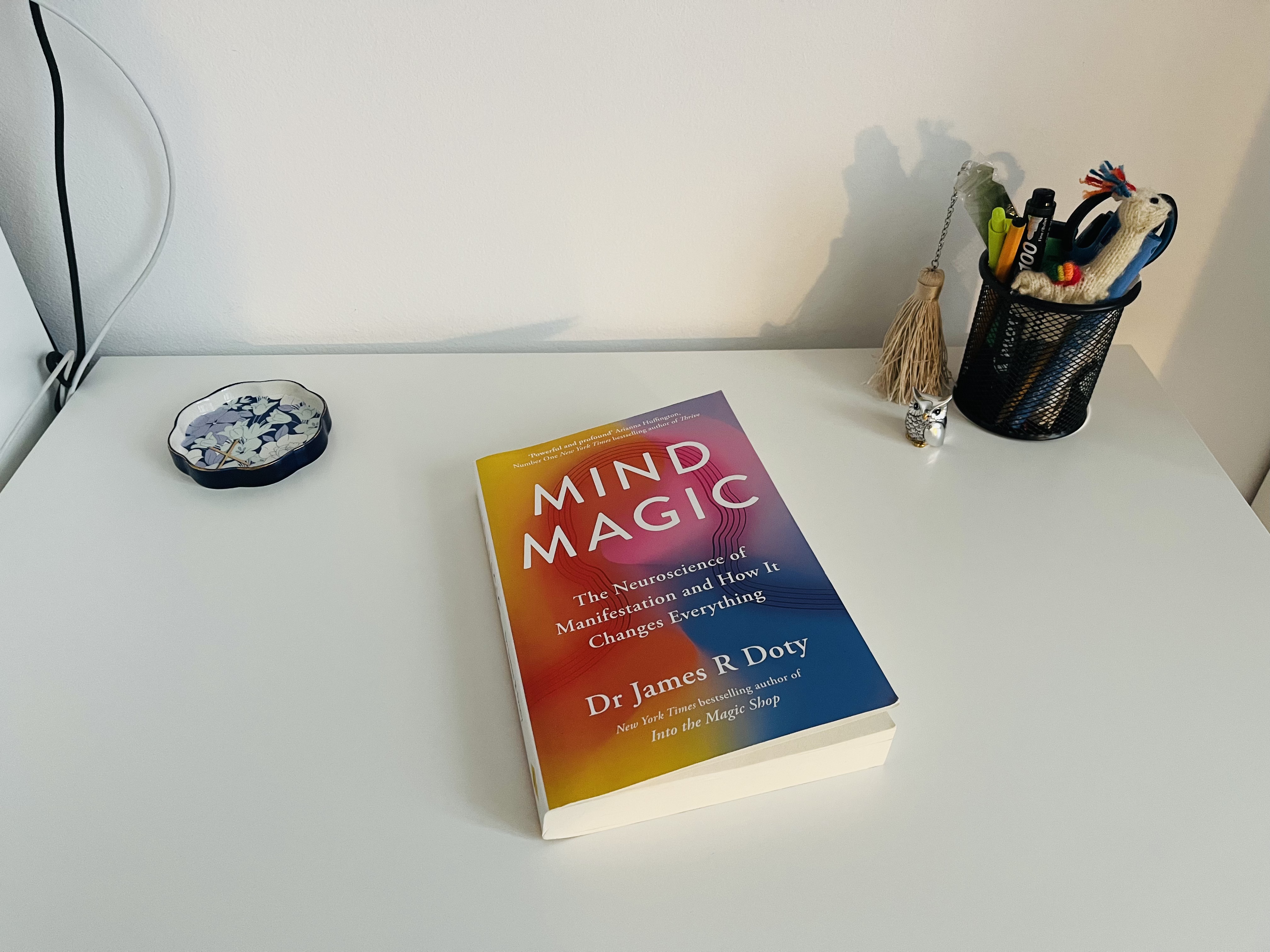
The Brain-Body Connection: What CIDP Warriors Can Learn from Dr. James R. Doty’s Mind Magic
Why CIDP Warriors Should Care About the Neuroscience of Manifestation
I’ve always been into self-help books — but after being diagnosed with CIDP (Lewis-Sumner Syndrome), that fascination turned into a lifeline.
For that reason, I’m always on the hunt for a good self-help book, and this one found me after I watched Lewis Howe’s YouTube interview with Dr. James Doty.
“The universe doesn’t give a fuck about you. Not because you’re unworthy, out of alignment, or cursed for ten generations. No, the universe doesn’t give a fuck about you because it has no fucks to give.” (– Dr. James R. Doty, Mind Magic)
When I first read these words in the opening pages of the book, I thought Dr. Doty might be a Stanford University professor and know a thing or two about the brain and secrets of our nervous system, but right here, he clearly missed the memo on the basics of motivational speaking.
To say I was shocked would be an understatement—I cried a little as I felt a little piece of my optimism crumble inside. I mean, I always believed the universe would at least give some semblance of a fuck about me.
For a brief, dramatic moment, I considered hurling the book out the nearest window — but then I remembered it was a birthday gift from my family. Tossing it aside now would not only be wasteful, it would also make me look a tad ungrateful.
After all, I had asked for this book myself, so really, I couldn’t even blame the universe this time.
Seeing no other way around it, I decided to soldier on, explore the neuroscience of manifestation, and figure out why the universe is allegedly so indifferent to us mere mortals.
I was just plain curious…
How could something so vastly intelligent and ever-evolving, sophisticated and veiled in mystery, come across as… well, so rude?
As I kept reading, the author gradually unraveled his justification for that bold, in-your-face statement, defending it with stories from his own life and the lives of others.
And, I must admit, it started to make a lot of sense.
His argument?
Instead of relying on some magical external force to swoop in and fix everything, we already possess all the tools we need to shape and control our own lives.
The star players here?
Neuroplasticity, visualization, and manifestation.
While the universe may be indifferent, your brain certainly isn’t.
The good news?
Thanks to neuroplasticity—your brain’s remarkable ability to rewire itself—you have the power to transform stress into calm, fear into courage, and overthinking into intentional action.
So, fellow CIDP warriors — if that isn’t good news, I don’t know what is!
Next up: 7 neuroscience tricks that can make living with CIDP a little less chaotic.
7 Key Insights on the Neuroscience of Manifestation — What CIDP Warriors Can Learn from Dr. James R. Doty’s Mind Magic
Living with CIDP often feels like your body and mind are constantly negotiating with each other — one fighting fatigue, pain, and nerve issues, while the other tries to stay hopeful, strong, and calm. Dr. James R. Doty’s Mind Magic beautifully bridges these two worlds — neuroscience and compassion — and offers tools that can help anyone facing chronic illness reconnect with their inner power.
Here are seven key insights from Dr. Doty’s work, rewritten through the lens of living and thriving with CIDP.
1. Harnessing the Power of Neuroplasticity
Your brain is not static — it can change, grow, and rewire itself even after years of chronic illness. Neuroplasticity is living proof that healing can happen not only in the body but also in the mind.
When living with CIDP, it’s easy to get caught in cycles of worry, pain, and exhaustion. But just as nerves can sometimes regenerate, your brain can form new pathways that support resilience and calm.
Practical tip: Rewire your mind for strength.
Each day, spend five minutes focusing on something good — a moment of gratitude, a breath of relief, a memory that makes you smile. These micro-practices strengthen positive neural pathways, helping you respond to stress with steadiness instead of fear.
2. The Gratitude Game-Changer
Gratitude isn’t just a feel-good idea — it’s neuroscience. Dr. Doty explains that gratitude boosts serotonin and dopamine while lowering cortisol, the stress hormone.
For CIDP warriors, where physical symptoms often fluctuate and uncertainty looms large, gratitude becomes a stabilizer — a mental anchor. When you focus on what still works, on what brings light into your day, you train your brain to see possibility instead of limitation.
Practical tip: End each day by listing three things you’re grateful for — even small ones like a kind message, a good nap, or a calm moment. Over time, your brain starts to seek these moments naturally, easing stress and building emotional strength.
3. Visualization for Emotional Balance
Visualization isn’t wishful thinking — it’s a mental workout. When you imagine yourself walking with steadiness, breathing easily, or feeling strong, your brain activates the same regions that light up during real physical action.
For those living with CIDP, visualization can help retrain your body’s stress response and cultivate calm during flare-ups or treatments.
Practical tip: Close your eyes and picture your “calm zone.”
Maybe it’s your favorite chair, a forest trail, or a beach. Imagine every detail — the light, the air, the texture beneath your feet. This exercise teaches your brain to associate visualization with safety and comfort, which can help lower tension and pain perception.
4. Compassion as a Stress Reliever
Dr. Doty highlights compassion — both for others and yourself — as one of the brain’s greatest healers. Acts of kindness and self-kindness release oxytocin, which calms your nervous system and enhances connection.
When living with CIDP, self-compassion is essential. On hard days, your body is already doing its best — it deserves care, not criticism.
Practical tip:
- Offer yourself words of encouragement, not judgment.
- Do something kind for another person — message a fellow CIDP warrior, share your story, or simply listen.
Kindness rewires the brain toward peace, and that peace can become your daily medicine.
5. Mindfulness and Presence
Mindfulness isn’t about perfection — it’s about awareness. For CIDP patients, who often deal with physical discomfort and fatigue, mindfulness can be a lifeline to the present moment — the only place where peace actually exists.
When you slow your breath and focus on the now, your brain shifts from the fight-or-flight mode that amplifies stress and pain to a calmer, more balanced state.
Practical tip:
Spend 10 minutes daily focusing on your breath. Feel the air move in and out. If your mind wanders — and it will — just come back to the breath. Over time, mindfulness becomes second nature, easing overthinking and restoring inner calm.
6. The Science of Stress: Know Your Triggers
Dr. Doty reminds us that chronic stress reshapes the brain. For CIDP warriors, stress isn’t just emotional — it can worsen physical symptoms and fatigue. Knowing your triggers helps you respond rather than react.
Practical tip:
Keep a “stress and strength journal.” Write down what drains your energy and what restores it. Once you spot the patterns — certain activities, foods, or even people — you can protect your peace more consciously.
Remember: awareness gives you choice, and choice gives you power.
7. Reflection Builds Resilience
Reflection helps you understand your journey and honor how far you’ve come. It allows you to process frustration, celebrate small victories, and reconnect with hope.
For CIDP warriors, reflection can be both grounding and healing — a reminder that resilience is something you build, not something you’re born with.
Practical tip:
Write for 10–15 minutes a day. Note what went well, what challenged you, and what you’re learning. Over time, you’ll see that even the hardest days have taught you something about strength, patience, and grace.
Final Thoughts
Dr. James Doty’s Mind Magic isn’t just about manifestation — it’s about rewiring your mind to find peace, meaning, and possibility even when life doesn’t go as planned.
For those living with CIDP, these lessons remind us that while we can’t always control our bodies, we can shape our thoughts, our emotions, and how we show up for ourselves.
Healing in CIDP isn’t only about nerves — it’s also about nurturing the mind that carries them.



Leave a Reply