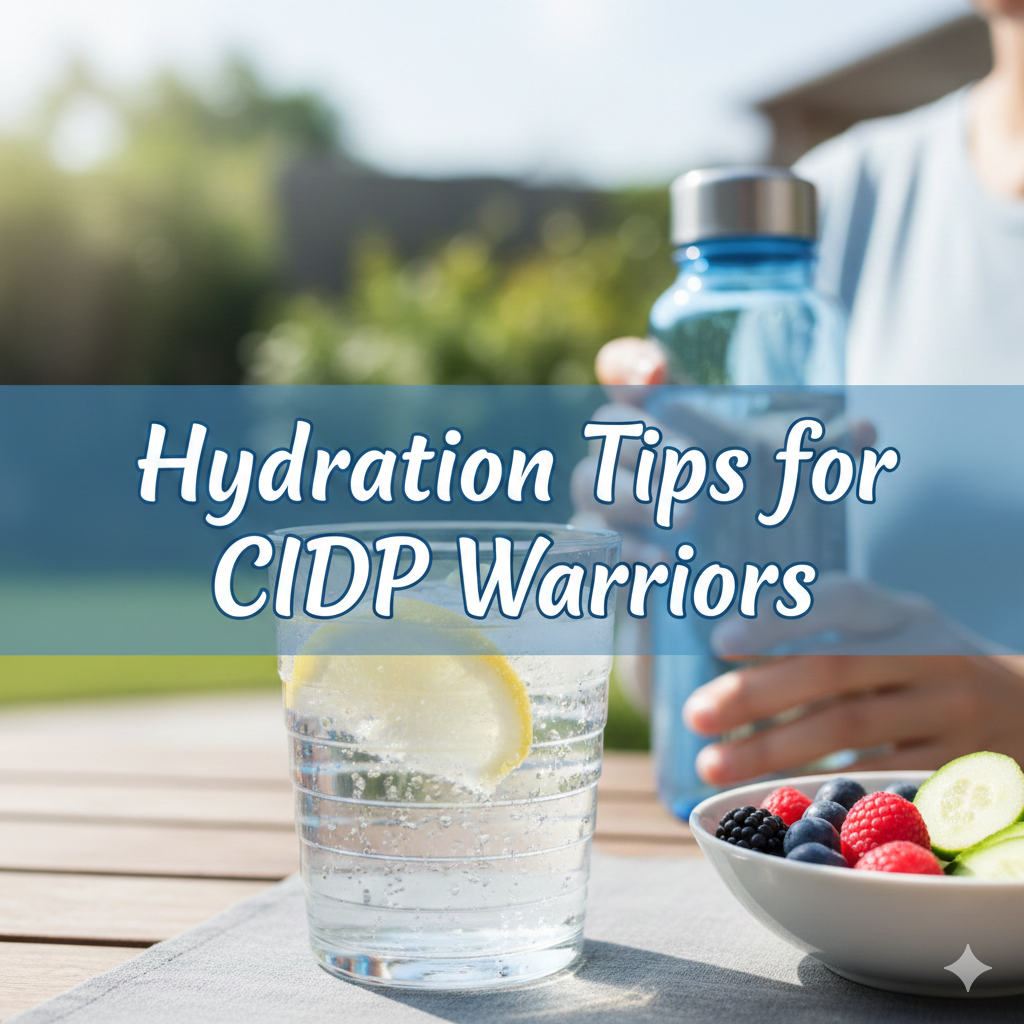
Sip by Sip: How Proper Hydration Supports Life with CIDP
Long story short: I have Lewis – Sumner Syndrome, a variant of CIDP, and I receive IVIg treatment every few weeks to manage its symptoms.
This post was inspired by a rather dramatic experience during my last IVIg hospital stay — one that involved a failed blood draw, multiple anxious nurses, and me seriously questioning whether hydration is a human right or a full-time job.
After a long deliberation, I decided it is BOTH!
On my last “pole day,” I must’ve made at least three nurses consider quitting their careers on the spot and relocating to Zanzibar in search of a less stressful existence.
Meanwhile, I was dealing with the not-so-fun part: the pain, the stress, and the looming threat of having to stay an extra day in the hospital just to get properly hydrated.
It wasn’t until the third nurse finally managed to find a vein (bless her persistence) that we avoided turning my arm into a pincushion.
Even then, my blood came out with the enthusiasm of a sloth on a hot day.
Traumatic?
A little.
Eye-opening?
Definitely.
That’s when I realized: hydration isn’t just about wellness — it’s survival, especially with CIDP.
My Lewis – Sumner Syndrome comes with a generous mix of symptoms — muscle weakness, chronic fatigue, nerve pain, dizziness — in other words, a whole collection of discomforts (as if any disease comes with comfortable symptoms), that can shift from one day to another.
And just when you think you’ve gotten used to one set, they can shift without warning.
But there’s one often-overlooked factor that can make a surprising difference in how we feel day to day: hydration.
First Things First: What Are the Signs of Dehydration?
Before diving into hydration and CIDP specifically, it’s helpful to know the general signs of dehydration. Many of them can overlap with CIDP symptoms, which makes them easy to miss.
Here are common indicators that you may be dehydrated:
- Dry mouth or lips
- Thirst (even mild thirst is a sign you’ve already started dehydrating)
- Dark yellow urine or infrequent urination
- Headaches or feeling lightheaded
- Fatigue or unusual tiredness
- Muscle cramps
- Dry, flaky skin
- Rapid heartbeat
- Dizziness when standing up (orthostatic hypotension)
- Brain fog or difficulty concentrating
If you notice a few of these symptoms regularly — especially in combination — it might be time to rethink your relationship with hydration.
In other words: drink more fluids
Why Is Proper Hydration Important for CIDP Patients?
Because CIDP involves inflammation and damage to the nerves outside the brain and spinal cord, which disrupts communication between the brain and muscles.
This can cause muscle weakness, fatigue, and pain, and without proper hydration, it just gets worse.
So let’s talk about why staying properly hydrated is essential for CIDP warriors, what symptoms it can impact, and practical tips for making hydration a daily wellness habit.
Staying well hydrated helps in several ways:
- Supports Nerve and Muscle Function: Water is vital for maintaining the electrical conductivity of nerves and muscle cells. Dehydration can worsen muscle cramps, weakness, and fatigue, which are already concerns for CIDP patients.
- Reduces Treatment Side Effects: Many CIDP patients receive treatments such as intravenous immunoglobulin (IVIG) or subcutaneous immunoglobulin (SCIG) therapies. Adequate hydration before and after these infusions is important to minimize infusion-related reactions and reduce risks such as thrombosis (blood clots) and hyperviscosity (thickened blood).
- Supports Immune System Balance: Though CIDP is an autoimmune disease, proper hydration helps maintain overall immune system function and reduces systemic inflammation, which may indirectly benefit nerve health.
- Improves Overall Well-being: Dehydration can exacerbate chronic pain and fatigue, common in CIDP. Proper hydration supports muscle function, reduces pain, and helps maintain energy levels.
8 Easy Hydration Habits to Help You Feel Better with CIDP
1. Start Your Day with Water
Before coffee, drink a full glass of water. This helps rehydrate after sleep and kickstarts digestion.
I drink a glass of warm water in the morning, sometimes with a drop of fresh lemon juice and a sprinkle of cayenne pepper.
2. Use a Refillable Water Bottle
Keeping water within arm’s reach encourages you to sip regularly.
Consider using a bottle with time markings or motivational reminders to help you stay on track.
I prefer thermal bottles because they maintain my water’s temperature.
I avoid adding any sugary substances, as they can lead to mold buildup in the straw and mouthpiece.
3. Make It Flavorful
Add lemon, cucumber, mint, berries (in the summer); ginger, cloves or orange slices in the winter to your water to make it more enjoyable and refreshing.
If I am not on the way and not using YETI, I like these flavours.
4. Set Hydration Reminders
Use apps or phone alarms to remind you to drink water every hour.
You can also link hydration to specific activities (e.g., sip before each meal, after taking meds, or post-exercise).
I overheard in the hospital a doctor advising a patient that 10 sips every 30 minutes is a rule of good hydration.
5. Don’t Forget Electrolytes
Sometimes water alone isn’t enough.
Low sodium or potassium levels can cause symptoms like dizziness or cramping.
Consider adding a gentle electrolyte powder (without artificial sweeteners) to your water a few times a week.
For managing CIDP, replenishing electrolytes is crucial because these minerals—such as sodium, potassium, calcium, and magnesium—support nerve function, muscle control, and overall hydration balance.
The best drinks to replenish electrolytes for CIDP patients are those that provide a balanced mix of these minerals without excessive sugars or additives.
Great natural sources include:
- Coconut water
- Broth-based soups
- Salted vegetable juices (like tomato or beet juice)
6. Hydrating Foods Help Too
Clear broths, such as chicken or vegetable broth, provide sodium and other minerals essential for fluid balance.
They also offer warm hydration and can be soothing during treatment weeks, helping maintain electrolyte levels and hydration without added sugars
Incorporate water-rich foods like cucumbers, watermelon, zucchini, oranges, and soups into your meals. I live in Poland. A soup is a staple here so that one is easy for me.
7. Adjust Based on the Season
In summer, increase your intake. In winter, warm teas and broths are comforting and hydrating.
Keep fluids seasonal and soothing.
8. Track Your Intake
Use a hydration tracker app or a printable sheet (we’ll include one below!). Tracking helps build the habit and spot patterns that affect how you feel.
What to Drink for Optimal Hydration in CIDP?
Recommended Drinks:
- Water: The primary and most effective hydration source. Drink plain water throughout the day, especially before and after treatments like IVIG or SCIG infusions. It is readily absorbed and free of additives.
- Electrolyte-rich fluids: Coconut water is a natural option that provides water plus potassium, magnesium, and sodium, which help maintain fluid balance and prevent muscle cramps. Sports drinks can also be used if electrolyte replacement is needed, especially after physical activity, but they often contain added sugars and should be consumed in moderation .
- Milk: Contains water, electrolytes (potassium, calcium, magnesium), and nutrients that slow fluid loss and support hydration over time. It can be a good option if appetite is poor or nausea is present.
- Hydrating fruits and vegetables: Foods like watermelon, honeydew, cantaloupe, and raw tomato-based soups (e.g., gazpacho) have high water content and provide electrolytes and antioxidants, supporting hydration and reducing inflammation.
Drinks to Limit or Avoid:
- Caffeinated beverages and alcohol: These can increase urine output and contribute to dehydration, so they should be limited.
- Sugary or artificially flavored drinks: These may not hydrate effectively and can contribute to inflammation, which CIDP patients should avoid.
Here’s a handy table rounding up drinks that can be especially helpful for staying hydrated when you’re living with CIDP.
These picks aren’t just about quenching your thirst—they also offer a little extra love in the form of electrolytes, anti-inflammatory perks, and overall support for your nerves and well-being.
| Drink | Hydration Benefits | CIDP-Friendly Notes |
|---|---|---|
| Water | The gold standard—pure, effective, and essential for every cell in your body. | Sip throughout the day; add lemon or cucumber slices if plain water feels boring. |
| Electrolyte Water | Helps restore minerals like sodium, potassium, and magnesium. | Great during flare-ups, heatwaves, or after sweating—just watch for added sugars. |
| Coconut Water | Naturally rich in potassium and electrolytes. | A gentle, natural alternative to sports drinks; choose unsweetened versions. |
| Herbal Teas | Hydrating and soothing; options like chamomile, ginger, or rooibos are caffeine-free. | Can calm the nervous system and ease inflammation; avoid licorice if on blood pressure meds. |
| Diluted Fresh Juices | Adds flavor, vitamins, and hydration. | Dilute 1:1 with water to avoid sugar spikes; beet or carrot juice may aid circulation. |
| Infused Water | Water + fruit/herbs = tasty motivation to drink more. | Try mint + lemon or strawberry + basil for a refreshing twist. |
| Bone Broth | Hydrating and rich in amino acids and minerals. | Supports gut and immune health; sip warm for a comforting boost. |
| Vegetable Broth | A lighter, plant-based version of bone broth. | Easy on digestion and adds sodium for electrolyte balance. |
| Low-Sodium Sports Drinks | Replenish fluids and electrolytes. | Use only as needed; look for low-sugar, low-sodium versions without artificial dyes. |
How Often and How Much to Drink? general guidelines for CIDP patients
Hydration isn’t a one-size-fits-all situation — it really depends on things like your body weight, how active you are, the weather outside, and even your treatment routine.
That said, if you’re living with CIDP, there are some general hydration goals to keep in mind.
Think of them as friendly guidelines, not hard rules – and here they are:
- Daily Fluid Intake: Aim for at least 8 cups (about 2 liters) of water daily as a baseline. Some patients may require more, especially if they are physically active, live in hot climates, or are undergoing immunoglobulin therapy.
- Before Treatment: Patients should drink sufficient fluids before IVIG or SCIG infusions to reduce the risk of side effects. This may mean increasing fluid intake the day before and the day of treatment. This one I’ve learned the hard way!
- Throughout the Day: Instead of consuming large amounts at once, sip fluids regularly to maintain steady hydration. This takes some good old mindfulness and discipline to learn. IIt’s all worth it, as this approach helps prevent stomach upset, especially if nausea is present.
- Monitor Hydration Status: Pay attention to thirst, urine color (pale yellow is ideal), and symptoms such as dizziness or dry mouth. Adjust fluid intake accordingly.
Summary: How to Know You’re Drinking Enough for Nerve Repair
- Your urine is light yellow, not dark
- You don’t wake up thirsty or with dry mouth
- You maintain stable body weight day to day
- You have no muscle cramps or persistent fatigue
- Your skin quickly returns to normal after pinching
- Your nerve symptoms are stable or improving, not worsening.
If you’re starting to feel like a wilted houseplant, it might be time to sip some water!
Try upping your intake gradually—no need to chug a gallon all at once.
Toss in some electrolyte-rich drinks if you’ve been sweating, moving a lot, or just feeling off.
A good ballpark is 8–10 cups a day (that’s 64–80 ounces), but feel free to adjust depending on how active you are, how hot it is, or what your body’s going through.
Hydration is personal, after all!
By keeping an eye on these signs, you can make sure you’re staying hydrated enough to give your nerves the support they need to heal and do their thing.
After all, CIDP is mostly about your nerves, and you want to do whatever it takes to help them.
A Personal Note: What I Noticed When I Got Serious About Water
I used to start my day with coffee and forget about water until late afternoon.
By then, I’d often feel sluggish and my muscles would cramp, tweak, or ache more.
Once I made it a point to start my day with a big glass of warm water and sip regularly throughout the day, I noticed a change.
My daily fatigue has lightened, and my focus is sharper.
No single change will solve everything — sometimes the simplest solutions, like water, are the most helpful.
Let’s Wrap It Up: Sip, Don’t Guzzle
Hydration isn’t about chugging liters of water at once. It’s about consistent, mindful sipping throughout the day.
And let me tell you it isn’t easy to work out this habit.
I’d never pay so much attention to hydration if not for LSS/CIDP and my hospital stays, where patients are constantly reminded of getting a proper amount of liquids into their sometimes severely dehydrated bodies.
It’s an act of self-care that supports your nervous system, your muscles, and your overall energy.
If you’re living with CIDP, think of hydration as one of your gentle daily tools. It’s a simple and very necessary act of self-care, and your body will thank you.
A small note: I’m sharing my personal experience as someone living with CIDP, not as a medical professional—always trust your own body and consult a qualified healthcare provider for medical advice.
SHARING IS CARING – IF THIS SUPPORTED YOU IN ANY SMALL WAY, SHARING IT MAY SUPPORT SOMEONE ELSE WITH CIDP, MMN, GBS, OR SIMILAR CONDITION, AND SUBSCRIBING KEEPS THIS CIRCLE AND AWARENESS GROWING
Here is the source of my learning:
- https://www.sports-injury-physio.com/post/drinking-enough-water
- https://drchandrilchugh.com/blog/impact-of-hydration-on-neurological-health/
- https://ahs.atlantichealth.org/about-us/stay-connected/news/content-central/2023/are-you-drinking-enough-water.html
- https://www.resultspt.com/blog/posts/signs-you-need-to-drink-more-water
- https://lakewoodschiropractic.com/stay-hydrated-the-crucial-connection-between-hydration-and-nerve-health-in-the-summer/
- https://nuunlife.com/blogs/news/what-does-it-feel-like-to-be-fully-hydrated
- https://nervedoctors.com/the-hidden-link-between-dehydration-and-nerve-pain/
- https://drchandrilchugh.com/blog/nutrition-for-nerve-regeneration/
- https://njaes.rutgers.edu/sshw/message/message.php?p=Health&m=395
- https://www.heart.org/en/healthy-living/fitness/fitness-basics/staying-hydrated-staying-healthy
- https://www.nhsinform.scot/campaigns/hydration/
- https://www.bda.uk.com/resource/the-importance-of-hydration.html
- https://pmc.ncbi.nlm.nih.gov/articles/PMC4110386/
- https://www.nice.org.uk/guidance/ng211/evidence/c.2-specific-programmes-and-packages-in-nerve-injury-for-people-with-complex-rehabilitation-needs-after-traumatic-injury-pdf-10947883508
- https://www.bssh.ac.uk/_userfiles/pages/files/professionals/Resources/65mast_htm.pdf
- https://neurofit.app/learn/en/water_nervous_system/
- https://pmc.ncbi.nlm.nih.gov/articles/PMC8303934/
- https://www.gbs-cidp.org/wp-content/uploads/2020/09/Your-Guide-to-Understanding-the-Treatment-of-CIDP.pdf?utm_source=chatgpt.com
- https://texaspainexperts.com/how-dehydration-can-impact-chronic-pain/?utm_source=chatgpt.com




Leave a Reply