breathe smart, not just hard.
It took me a while to recover after Dr. Doty’s Mind Magic slapped me with this now-iconic truth bomb: “The universe doesn’t give a fuck about you.” And just as I was licking my wounds and patching myself back together, along comes another guy—with two unexpected observations that felt equally personal:
“You’re not chewing properly.”
“Also, you’re breathing too much.”
Let’s be honest: I thought I had breathing figured out. I’ve been doing it non-stop for almost half a century so I thought as long as air was going in and out, I was doing just fine. Apparently NOT… but okay? What’s next—blinking wrong?
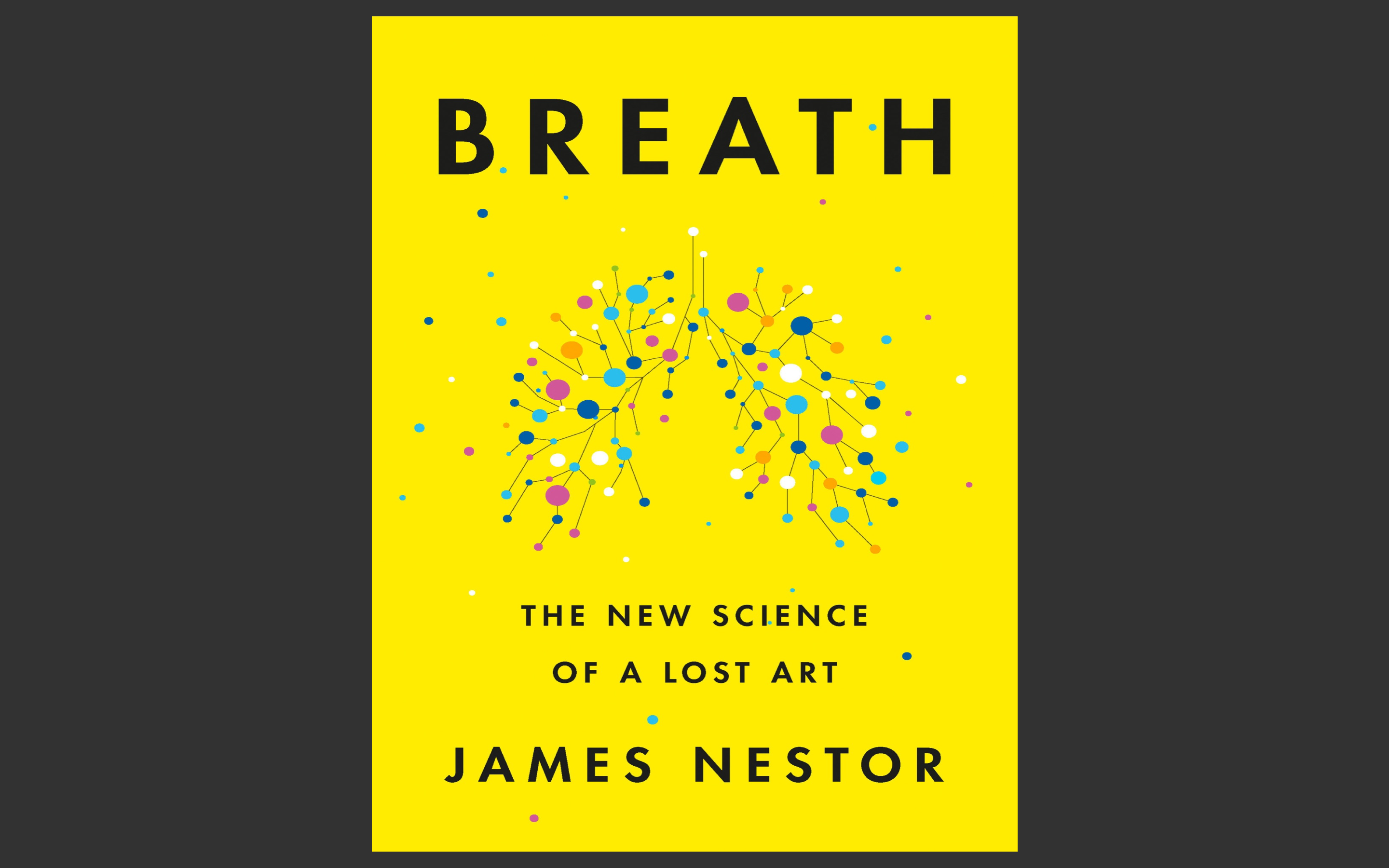
Still, curiosity (plus a stubborn hope for better health and inner peace) got the better of me, and I dove into James Nastor’s Breath. The New Science of A Lost Art (half-expecting him to tell me I should start photosynthesizing).
And let me just say this: Breath and Nestor’s writing is no lightweight wellness fluff. This book is deep. It’s got science, ancient wisdom, monks, divers, and more nose plugs than a synchronized swimming team. And while I will make jokes (because re-learning how to breathe through your nose can feel like trying to walk in ski boots), I also want to do justice to how much this book can change lives.
Nestor isn’t just writing from behind a desk, but travels the world (both physically and metaphorically) — from the catacombs beneath Paris (yes, he meets actual French cataphiles) to the icy heights of the Himalayas, where breathing becomes survival.
He mentions Wim Hof’s retreat in Poland (which made my little Slavic heart swell) references Philadelphia (my adopted-American city), and meets an incredible cast of breath-obsessed experts he calls “pulmonauts” — adventurers of the respiratory realm.
He dives into the practices of Tummo breathing in Tibetan monasteries, hangs out with scientists, freedivers, yogis, and even joins a group led by none other than Wim Hof, the Iceman himself, who guides people through extreme cold with nothing but breath and sheer willpower (and, probably, very thick socks).
I am sitting here trying to add some lightheartedness to my writing, but make no mistake — this book is not to be trivialized by any means. It’s a wonderful, well-researched piece of work, and one of those books that could be a turning point for many — especially those living with depression, anxiety, PTSD, or chronic autoimmune neurological illness.
This book reminded me that something as simple as a breath — something we do 25,000 times a day — can hold the key to better health, calmer minds, and even longer lives. And that’s nothing to giggle at.
This entire book was inspired by, believe it or not, his own chewing.
As random as it might seem, this mundane act—that few seconds of soft chewing—was the catalyst for writing this book…
James Nestor
At first, Nestor just wanted to fix his own health. Simple enough. But I don’t think he had any idea just how deep this rabbit hole went. Once he realized the full scope of humanity’s breathing crisis, it got… existential. And from that moment, he made it his mission to dig deeper.
And dig he did. This man excavates the forgotten art of breathing like an archaeologist with a headlamp, a chisel, and a mild panic attack.
It was then—mewing in unison with another grown man in a homemade castle, clumps of human bone dust still caked in the eyelets of my boots—that I realized the quest to discover the lost art of breathing was going to be a bit of a shit show.
— J.N
The further you read, the more it all starts to make sense. Within a few pages, I found myself drawn into this world where even the most ordinary habits—like breathing or chewing—are full of forgotten wisdom and surprising power.
Simpler and less intense methods of breathing—slow, less, through the nose with a big exhale—can also diffuse stress and restore balance. These techniques can be life-changing… especially for those with long-standing chronic conditions.
— J. N
Turns out, maybe it’s not about doing more, but about doing the simple things better. Evidently, modern humans have been mouth-breathing, over-breathing, and basically wheezing our way through life like we’re trying to win a prize—and it’s not doing us any favors.
The more we overbreathe, the more we expel this essential gas, and the less oxygen our bodies retain.
— J. N
Talk about a book that makes you rethink your entire life… one inhale at a time.
The conclusion? Like most of modern humanity, I’ve been doing it wrong.
Not catastrophically wrong (I mean, I’m still alive, which is comforting), but wrong enough to have been short-changing my lungs, my brain, and yep—even my nervous system.
So I am glad I came across this work and…
Here’s what I discovered that actually helps—especially if you’re living with chronic illness, anxiety, or a frazzled nervous system:
🫁 1. Breathe Through Your Nose (Not Your Mouth)
Nasal breathing is your nervous system’s BFF. It filters, humidifies, warms, and slows the air—plus it boosts nitric oxide, which helps your cells get oxygen where it’s needed.
For people like me (dealing with CIDP, inflammation, or stress-induced jitters), nasal breathing is the simplest switch with the biggest payoff.
Quick tip: Try keeping your mouth gently closed during the day. At night, some people even use mouth tape (yes, it’s a thing!).
🐢 2. Slow It Down: The 5.5 Breath
5.5 seconds in, 5.5 seconds out—this is the magic rhythm that aligns with the body’s natural heart-lung sync. It calms your system, boosts oxygenation, and soothes frayed nerves.
Think: a gentle metronome for your soul.
Try it for 5–10 minutes a day and let your breath be your therapy.
🧘 3. Box Breathing: A Gentle Reset
Inhale for 4, hold for 4, exhale for 4, hold for 4.
It’s structured. It’s soothing. And for brains that like a sense of order amidst bodily chaos—this one’s a winner.
🌊 4. Exhale Longer Than You Inhale
The vagus nerve (your relaxation superhighway) loves a long exhale. This simple tweak sends your whole body a message: “Hey, we’re safe.”
Try: Inhale for 4, exhale for 6–8. You’ll feel the shift.
🤫 5. Short Breath Holds After Exhale (Gently!)
No Wim Hof-ing needed. Just pause for a few seconds after exhaling before your next inhale. It builds CO₂ tolerance and helps your body relearn how to breathe efficiently without gasping like a Victorian lady in a corset.
Final Thoughts
Years ago, when I first started working with my therapist, one of our earliest sessions focused on breathing. I still remember lying flat on the medical bed, trying to time my inhales, holds, and exhales—one breath at a time. It may have looked simple from the outside, but inside, something powerful was happening.
That practice helped me realize how much control we can actually reclaim with something as basic—and essential—as breath.
So no, I’m not exactly new to this, but when I discovered the book I knew it’s for me and I knew I’ll learn something profound.
Today I can say with confidence that conscious breathing works. It’s not just wellness fluff or a trendy hack.
It’s gentle, it’s free. It’s the one thing that’s always with you.
You don’t need to master ancient techniques or become a breathwork guru overnight. Just start where you are, with the breath you have, and a little curiosity.
You don’t need to overhaul your life to start healing.
Sometimes, it begins with one breath—intentional, slow, yours.
It’s a real, rhythm-regulating, steadying tool you can lean on—especially when life gets heavy. Whether you’re feeling panicky, low, overwhelmed, or just knocked sideways by stress, a few mindful breaths can start to bring you back.
Use it. Trust it. Come home to it.
Be kind to yourself.


Leave a Reply